
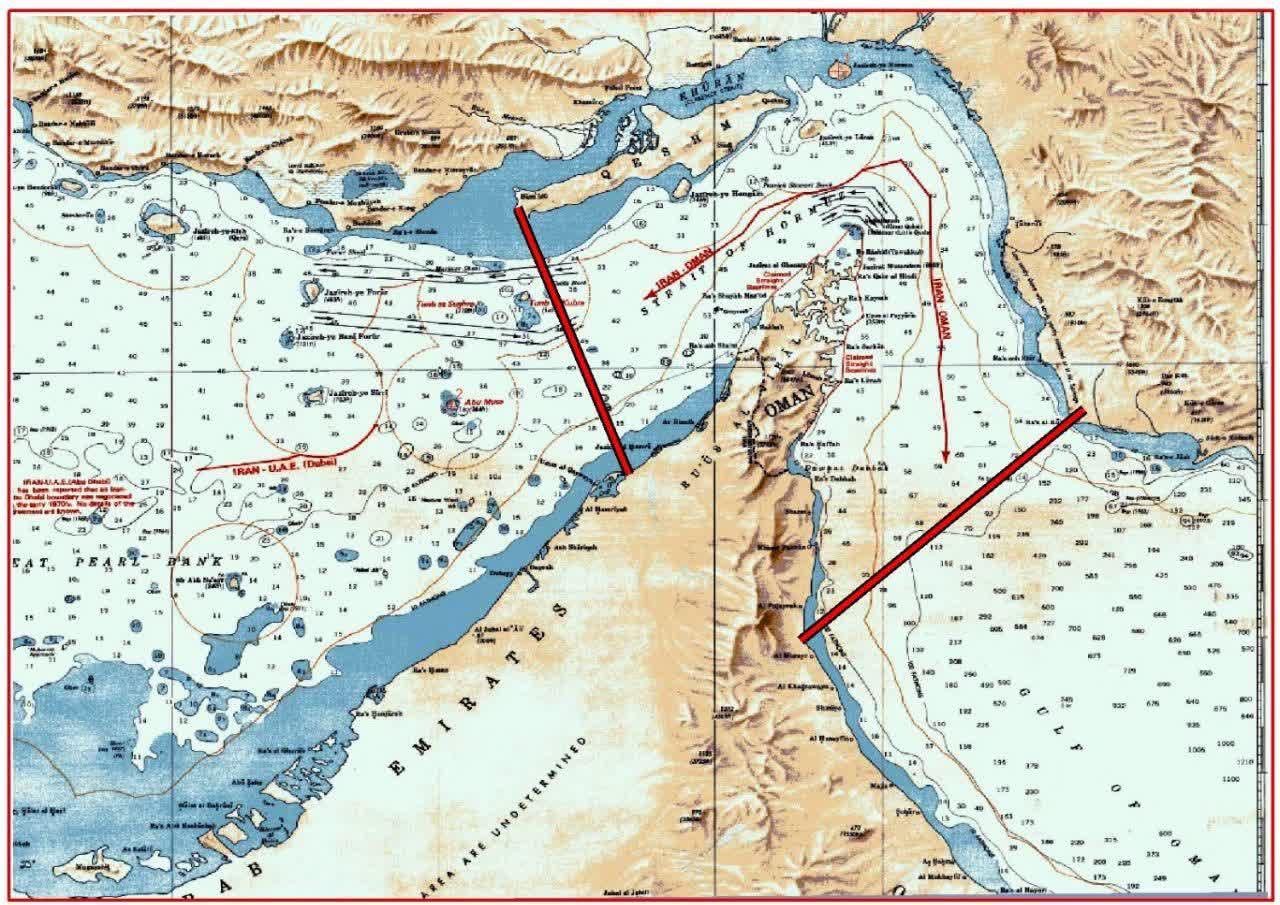
President Trump launched "Project Freedom" yesterday (May 3) to guide neutral commercial vessels out of the Strait of Hormuz, calling it a "humanitarian process" after countries asked the U.S. to help free their ships. Trump warned explicitly that any interference with the process "will, unfortunately, have to be dealt with forcefully." The strait carries roughly 25% of global seaborne oil. U.S. oil fell below $100/barrel on the announcement. UKMTO (United Kingdom Maritime Trade Operations) confirmed a new U.S. security corridor is now in place, directing vessels south of the old traffic lanes, closer to Oman's coast. According to the Wall Street Journal, the mission will not include direct U.S. Navy warship escorts. Instead, ships receive instructions on safe navigation routes through the strait, with coordination between shipping companies and insurers. CENTCOM (U.S. Central Command) is backing the operation with guided-missile destroyers and over 100 aircraft. Senator Lindsey Graham endorsed the move, saying it's "clear to me that Iran is playing games through negotiations as their last offer to end the conflict was absurd." The IRGC (Islamic Revolutionary Guard Corps) responded immediately. Iran's armed forces command warned the U.S. Navy not to approach or enter the strait. The IRGC released maps outlining zones it claims to control and drew a box across the waterway, west boundary from Qeshm Island to the UAE coast near Umm Al Quwain, east boundary from Mobarak Mountain to Fujairah. Major General Abdollahi issued a full statement: "Safe passage must be coordinated with our forces." Ebrahim Azizi, head of Iran's parliament national security committee, warned that any American interference in what he called the "new maritime regime" of the Strait of Hormuz will be considered a violation of the ceasefire.
On the water, things are already moving. Yesterday a bulk carrier was attacked 11NM west of Sirik by multiple small craft in what UKMTO flagged as a possible IRGC seizure. Crew safe, no damage. Ships near Ras Al Khaimah received VHF orders to clear anchorage. After those warnings, multiple cargo vessels, bulk carriers, and tankers began pulling out of Ras Al Khaimah and Mina Saqr. A tanker 78NM north of Fujairah was hit by unknown projectiles. Crew safe, no environmental impact. IRIB (Iran state TV) added a new dimension: it claims to have evidence that the UAE was involved in recent strikes on Iranian territory. A senior UAE official, Reem Al Hashimy, responded publicly: "Geography prevails. We're going to have to live with each other. Nobody should control the Strait of Hormuz." The IRGC claimed today (May 4) that "with a decisive and swift warning from the Navy of the Islamic Republic Army, the entry of enemy American Zionist destroyers into the Strait of Hormuz area was prevented." Iran's Fars News Agency then escalated further, claiming two missiles hit a U.S. warship near Jask Island after it ignored Iranian warnings. CENTCOM issued a direct rebuttal: "No U.S. Navy ships have been struck. U.S. forces are supporting Project Freedom and enforcing the naval blockade on Iranian ports." Tasnim, citing a military source, reported that Tehran is "fully prepared for any scenario" in the Strait of Hormuz and that the Islamic Republic will not allow Trump and U.S. forces to "bully" Iran. Pakistan brokered a confidence-building step: 22 crew from the seized Iranian vessel MV Touska were evacuated to Pakistan overnight and will return to Iran today. The ship is being moved to Pakistani waters for repairs and return. Iran's Baghaei confirmed bilateral talks with Oman on a protocol for safe passage are ongoing. A senior Iranian lawmaker announced that new legislation will establish conditions for transit through the strait. |

Trump Rejects Iran's Proposal, Negotiating Team Gets a New Addition
Trump dismissed Iran's latest 14-point proposal yesterday: "I've reviewed it thoroughly, and it's not acceptable to me." The U.S. passed its counter through Pakistan, which is serving as mediator. Iran's Foreign Ministry confirmed they received the response and are examining it but hasn't committed to terms. Enriched uranium remains the central dispute, according to i24NEWS. The administration added Nick Stewart from FDD (Foundation for Defense of Democracies) to the negotiating team, joining envoy Witkoff's office. Stewart is known for backing aggressive pressure including sanctions and military options. The team now includes Vance, Kushner, Stewart, and Witkoff. Envoy Witkoff confirmed to CNN that talks are ongoing. Iran's FM spokesman Baghaei said today: "We received the answer from the U.S. through Pakistan. It can be assumed that the U.S. habit of excessive demands and unreasonable demands is not something that is easy for it to stop." Iran isn't hiding what it's doing on the other side. An Iranian report revealed a meeting this week between Ghalibaf, the IRGC, the president, and FM Araghchi that focused entirely on war scenarios, not diplomacy. The IRGC said U.S. options have narrowed, that Trump must choose between "an impossible military operation or a bad deal." Iran's Foreign Ministry spokesman said today they have no nuclear weapons negotiations at this point. Iran's Deputy Parliament Speaker Haji-Babaei said the U.S. needs to "accept the ten conditions of the Islamic Republic." Senior Israeli officials told News 14: "A return to fighting in Iran requires readiness. It's not a question of if, but when." Yedioth Ahronoth reported Israel assesses the chances of renewed fighting are rising as Washington weighs a rapid, high-impact strike with ground operations under consideration. U.S. Attorney General Todd Blanche stated the United States is "engaged in a military operation in Iran, not a war." Overnight, 11 USAF refueling tankers were airborne simultaneously across the Middle East, with Tel Aviv now a major hub for U.S. fuel tankers. |

IDF Launches Widespread Attack on Hezbollah
The IDF began a widespread attack on Hezbollah today (May 4) after what it called multiple ceasefire violations. 7th Brigade forces eliminated 10 Hezbollah fighters over the past two days across multiple incidents in southern Lebanon. A loaded launch site ready to fire was destroyed alongside weapons storage infrastructure and military buildings. The IAF struck Hezbollah infrastructure after an anti-tank missile was fired at Israeli forces. No Israeli casualties reported. The IDF issued evacuation warnings to residents in Qana, Dbayel, Qaaqaiya al-Jisr, and Sarafand, telling them to move at least 1,000 meters away from populated areas to open ground. The warning stated explicitly that anyone near Hezbollah operatives or infrastructure is at serious risk. The 91st Division hit a launch site separately.
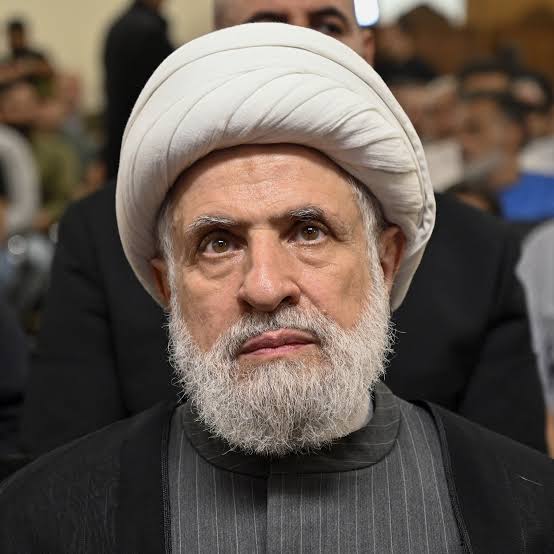
Hezbollah leader Naim Qassem issued a written statement declaring there is no ceasefire in Lebanon, only "Israeli-American aggression." He claimed Israel has not taken a single step under the ceasefire agreement. Hezbollah released footage claiming an FPV drone strike on an Israeli armored personnel carrier in Bint Jbeil. Iran's FM adviser told Al Jazeera they have "proposed ending the war on all fronts, including Lebanon, and examining the situation in Hormuz," tying the Lebanon front directly to the Hormuz standoff. |
Three fronts are moving at once. Hormuz is an active confrontation zone where Iran is testing how far it can push before the U.S. responds with force. Trump launched Project Freedom and warned interference will be met forcefully. Negotiations exist on paper but neither side is making concessions, and Iran's leadership just held a war-planning meeting. Lebanon's ceasefire is functionally dead, with the IDF now in open operations. The through-line: Iran is simultaneously escalating on Hormuz, refusing terms at the table, and supporting Hezbollah violations in Lebanon, while claiming at every step that it wants diplomacy. Washington is adding hardliners to its team, not doves. |
OSINT613 Intelligence Briefing |
||||||||
|
|
||||||||
|
Connect With Us |
||||||||
|
||||||||
|
|
||||||||
|
Know someone who should be reading this?
|